
English| EUR
Suggested for you
More currencies
Choose a language
Sancerre is one of the few wines whose textbook partner is made on the same hillside, four kilometres from the cellar door. This page explains the pairing logic behind that geography and how to use it once you are standing in a tasting room. It also covers the practical frame: when the town is open, what entry costs, and the arrival window that gives you the best of both.
Quick answer
Sancerre's benchmark partner is goat cheese, above all Crottin de Chavignol from the village next door, followed by oysters, river fish, asparagus and herb-driven salads. The wine's flinty acidity cuts fat and salt rather than competing with them, which is why heavy sauces and sweet dishes rarely work. Red and rosé Sancerre, made from Pinot Noir, shift the answer toward charcuterie and poultry.
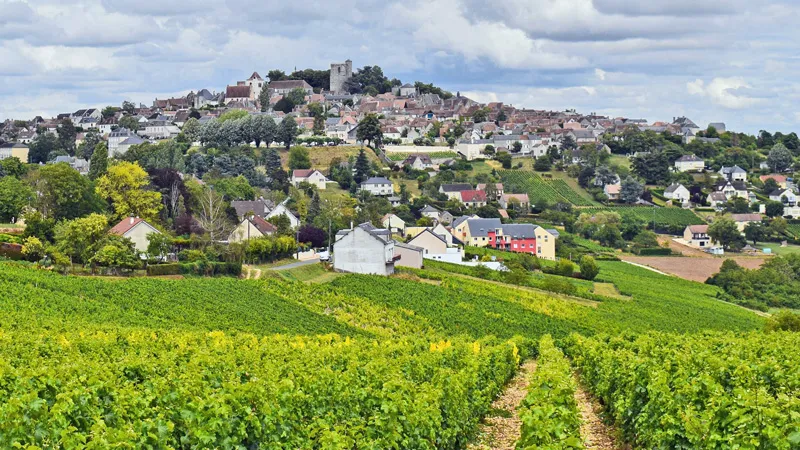
Chavignol, the village that gives its name to the region's most famous goat cheese, sits barely four kilometres from Sancerre's hilltop ramparts. The pairing that dominates every answer to what to pair with sancerre was therefore not invented by sommeliers; it was arrived at by farmers who happened to keep goats on the same Kimmeridgian marl that grows the Sauvignon Blanc. Terroir here is not a marketing word. The chalk and flint that give the wine its cutting acidity also give the pasture its character, and the two products have been eaten together for centuries because they were the two things available. Understanding that logic matters more than memorising a list. Sancerre blanc is high in acid, low in oak, and built on citrus, gooseberry and a mineral note locals call pierre à fusil, gunflint. Acidity of that kind performs a specific job at the table: it scours fat, lifts salt, and resets the palate between bites. That is why it works with the lactic tang of a young crottin, with oysters from the Atlantic coast, with pike-perch from the nearby Loire, and with green vegetables such as asparagus that defeat most other wines. It is also why it fails against cream-heavy sauces, caramelised sweetness and anything smoked to excess. Visitors often forget that the appellation also produces Pinot Noir, both red and rosé, which asks a different question entirely and answers it with rillettes, roast chicken and charcuterie boards. On the ground, this translates into a simple plan. The town itself is free to enter and technically accessible at any hour, but the tasting rooms, fromageries and restaurants that make a Sancerre wine tour worthwhile keep ordinary commercial hours; arriving between 09:00 and 18:00 gives you the fullest run of both. Buy the cheese before you taste, not after, and ask for crottin at two different ages so the contrast is obvious. Most cellars along the Route des Vins pour a range from several parcels, and comparing a Bué wine against one from Amigny in the same sitting teaches more than any what to pair with sancerre guide can. Take notes on which soil type you preferred. It will make the bottle you carry home a deliberate choice rather than a souvenir.
“The pairing was not invented by sommeliers; it was arrived at by farmers who kept goats on the same marl that grew the vines.”
Sancerre wine, primarily made from Sauvignon Blanc, maintains a natural acidity that complements the local terroir. The quintessential regional pairing is Crottin de Chavignol goat cheese, which balances the wine's citrus notes, while local freshwater fish and poultry offer further versatility for your meal.
restaurant
Located in the heart of Sancerre, this venue serves traditional regional dishes that emphasize local goat cheese and freshwater fish. €€
street
Situated on the main streets of Sancerre, this bakery provides fresh baguettes and local supplies perfect for an impromptu picnic. €
market
Found in the nearby village of Chavignol, this shop specializes in the authentic Crottin de Chavignol cheese essential for a local pairing experience. €€
restaurant
Positioned centrally in Sancerre, this establishment offers a focused menu designed to highlight the relationship between regional vintages and traditional Sancerre cuisine. €€€
The most effective way to experience Sancerre food pairings is to arrive between 09:00 and 18:00, which ensures access to local tasting rooms and regional kitchens. This daily window provides the quietest atmosphere for sampling wines alongside local goat cheeses and regional dishes.
—
These hours offer the most direct access to producers and restaurant staff for pairing advice.
—
Restaurants are fully operational, providing the widest selection of seasonal menu items for wine pairings.
—
This period allows for concluding tastings before the end of the recommended arrival window at 18:00.
Verdict: Plan your visit between 09:00 and 18:00 on any weekday to enjoy the full range of local culinary pairings.
The town of Sancerre is open to visitors daily throughout the week. Tasting rooms and regional establishments generally maintain consistent access to accommodate those exploring local wine pairings.
Entry to the town of Sancerre is free. Visitors only incur costs when purchasing food or wine pairings at individual establishments.
Verdict: A typical adult pays 0 EUR for town access, with additional spending dependent entirely on personal choices at tasting rooms and restaurants.
Everything you need to know about what to pair with sancerre
Sancerre is a crisp Sauvignon Blanc that excels alongside goat cheese, specifically the local Crottin de Chavignol. Other excellent matches include fresh oysters, grilled white fish, and seasonal vegetable dishes found in the Loire Valley. Exploring what to pair with sancerre is enhanced when you match the acidity of the wine with the creaminess of local cheeses.
Yes, many local producers offer guidance on food combinations as part of a Sancerre wine tour from Paris. These sessions often highlight how regional ingredients, such as river fish or farmstead chèvre, complement the minerality of the wine. Checking what to pair with sancerre locally provides the most authentic experience possible.
The best approach is to visit between 09:00 and 18:00 when local tasting rooms are fully operational. This arrival window ensures you have ample time to experience diverse flavor profiles in a relaxed setting. Planning your visit during these hours allows for a deeper appreciation of regional culinary traditions.
The most classic regional pairing is local goat cheese, which perfectly balances the high acidity and citrus notes of the wine. Dishes featuring asparagus or delicate herbs also pair well due to the herbal nuances in the Sauvignon Blanc. Discovering exactly what to pair with sancerre becomes effortless when sampling these regional staples at their source.
Entrance to the town of Sancerre itself is 0 EUR, and many tasting rooms provide expert guidance during your visit. While wine tours or specialized workshops may involve costs, the town itself is open to visitors without an admission fee. You can freely explore the region and consult with producers to learn about local pairings.
The town is open Monday through Sunday, 00:00–23:59, giving you complete flexibility for your itinerary. While the best arrival window is 09:00–18:00, visiting on a weekday often provides a quieter atmosphere for learning about wine and food matches. Regardless of the day, Sancerre remains an ideal destination for enthusiasts of refined gastronomy.